Foam Rolling For Fitness

Do You Foam Roll?

You should! although most people only consider doing so during rehab after an injury; but foam rolling is great for warming up before a run, or before getting started on your lifts. The motto goes “if it doesn’t hurt, you aren’t doing it right” and to be honest, that motto fits the bill quite well in my opinion. While rolling out the muscle in tender spots can be a tad bit uncomfortable at first, once the muscle has enough blood flow from the rolling technique and the knots are out – the end result will be worth the pain. 

Foam rollers come in many different varieties, some are bigger — which are useful for bigger muscle groups and some are smaller for the hard to hit areas — and all of them work towards the same purpose but some work better than others due to their specific characteristics. 

Before diving in head first, keep in mind that foam rolling does require technique, patience and consistency; as said before, it will hurt but it will work wonders for you as a result. I found on “Runners World” some examples of using a foam roller on certain muscle groups, it shows you a picture & describes in detail how to go about using it: Runners World Foam Roller Techniques this is important for those who haven’t yet used a foam roller and even for those athletes who don’t think they are getting the benefits from it and need to check to make sure they are using it correctly. Even as a personal trainer, I have to check myself when teaching my clients how to properly use a foam roller. 

In the past I have had a client whom suffered from lower back pain, he was going to physical therapy 1-2 days a week and wasn’t happy with the results (he felt as if physical therapy was making the pain worse and not hitting the area that was needed). My solution was to have him continue physical therapy but to give foam rolling a chance during our sessions — we made it a constant before our workouts (he didn’t like it at first, because it was painful) but with time and patience and consistency, he was well on his way of feeling much better and being able to overcome obstacles he couldn’t before due to lower back pain. Eventually he quit his physical therapy (because he didn’t want to put money into something that he felt wasn’t doing the job) and with my suggestion of purchasing his own foam roller for when he was at home — the end result was he was feeling better, more confident with his workouts, little to no pain and saving money. Now, this might not be a solution that works for every client and/or patient, but it does happen to be an option that can and should be used if possible in hopes it helps and if not rid of the pain, subside it. 

Foam rolling is not the end all, I do believe physical therapy is necessary for rehabilitation for injured persons, and can be very beneficial for most individuals who stick with the plan and continue to follow their routine at home – however, some people are more or less stubborn or refuse to pay the cost of  going to physical therapy, and I find that if the injury permits it, foam rolling should be an option (check with your physician or physical therapist) and again you don’t have to be injured in order to gain something from it, use it before workouts to release tightness and rid of knots, and to warm up those muscles. 

How many of you have used a foam roller? Were you happy with the results , why or why not. 

Warm Up First

Prevent Injury

It’s true, we are most likely skipping our warm up due to the mindset of “I don’t have time, I need to get in and out”, or “I don’t need a warm up, I feel fine” – says gym goers everywhere. Truly, I can take into consideration that both of these reasons are valid and hold some weight in a debate but if we are being totally honest with ourselves, then we both know that these excuses can only be used so many times before they are ONLY excuses instead of actual reasons. 

As a personal trainer, it took me a long time to get into the habit myself to start with a dynamic warm up — as a matter of fact, my warm up in the beginning was much like most people; walk on the treadmill for 5 minutes at a slow speed. I can’t complain because at least some people are “trying” and I was thinking that I was also “trying” at the time but little did I know that 5 minutes on a treadmill at a slow speed would not be a warm up that serves a decent purpose for a workout (especially my workout routine). There is so much more to warming up. 

A warm up should feed the purpose of your workout — it should replicate or work the muscle groups being used in your actual workout. i.e for example: if you plan on doing squats and deadlifts; then your workout should warm up your quads, hamstrings, glutes and lower back  so that when you are ready to perform the exercises, you are doing them while blood flow is working its way through you vs while being cold/stiff. 

A warm up doesn’t need to be LONG, I’d say 8-10 minutes at the very least. Mine take 12-15 minutes typically. 

Warm up should be dynamic in the beginning of the workout vs static. Leg swings, bicep curls, band pull aparts, bodyweight squats, inchworms, etc are all dynamic exercises vs sitting down to a hamstring stretch. 

Warm up should get your HR up. NOT to the point where you are too fatigued to do your workout. 

Next time you are at the gym or beginning an at home session, take a few minutes to warm up, your body will appreciate it more and your performance might be better off in the long scheme of things. 

Alternatives to the squat

If Doing Squats is not for you… Try something new 

Photo by Sven Mieke on Unsplash

For most people, squats are the essential part of leg day. even more so for those who want work on their glutes and build strength in their legs – but as a personal trainer, I have had clients who weren’t fond of squats or couldn’t yet entertain doing them because they have a weak core, weak mobility in their ankles, not yet strong enough, or aren’t comfortable with the movement/ self conscious. Whether you enjoy doing squats or have no interest in learning — I think it is important to see the alternatives to an exercise to aid in variety and to build self confidence in working similar muscle groups. As a trainer, I always stand by the motto “Have a plan A, B, and C” because as a trainer you have to be willing to adapt to your client’s needs and if plan A isn’t in their best interest then to have a Plan B and C to replace A or build up to A would be a better solution than to cancel the workout session – not to mention when you skip an exercise due to the person not being able to manage the movement, you are basically telling your client “you can’t do this” (in turn makes them self conscious and they lose motivation because they feel like a failure). Instead it is better to start with Plan A and if plan A can’t be performed safely with good technique/form then plan B and C should compliment A as either a regression or an exercise that is working as an alternative in order to work the same muscle groups. 

In the same context, if you are someone working out and happen to have a hard time performing squats — then do your research and find an exercise that helps to build your weakness so that you can work up to squats or find an alternative that works the same muscle groups & can be performed confidently. 

In this blog post, I am going to name off a few alternatives (exercises) that can be done in place of squats or that work same or/similar muscle groups as the squat does. Keep in mind that the squat is a compound movement — so it works as a full body exercise but without proper form/technique it can cause injury.  Keep in mind that these exercises I list can also  be used to build the strength needed for a proper squat. 

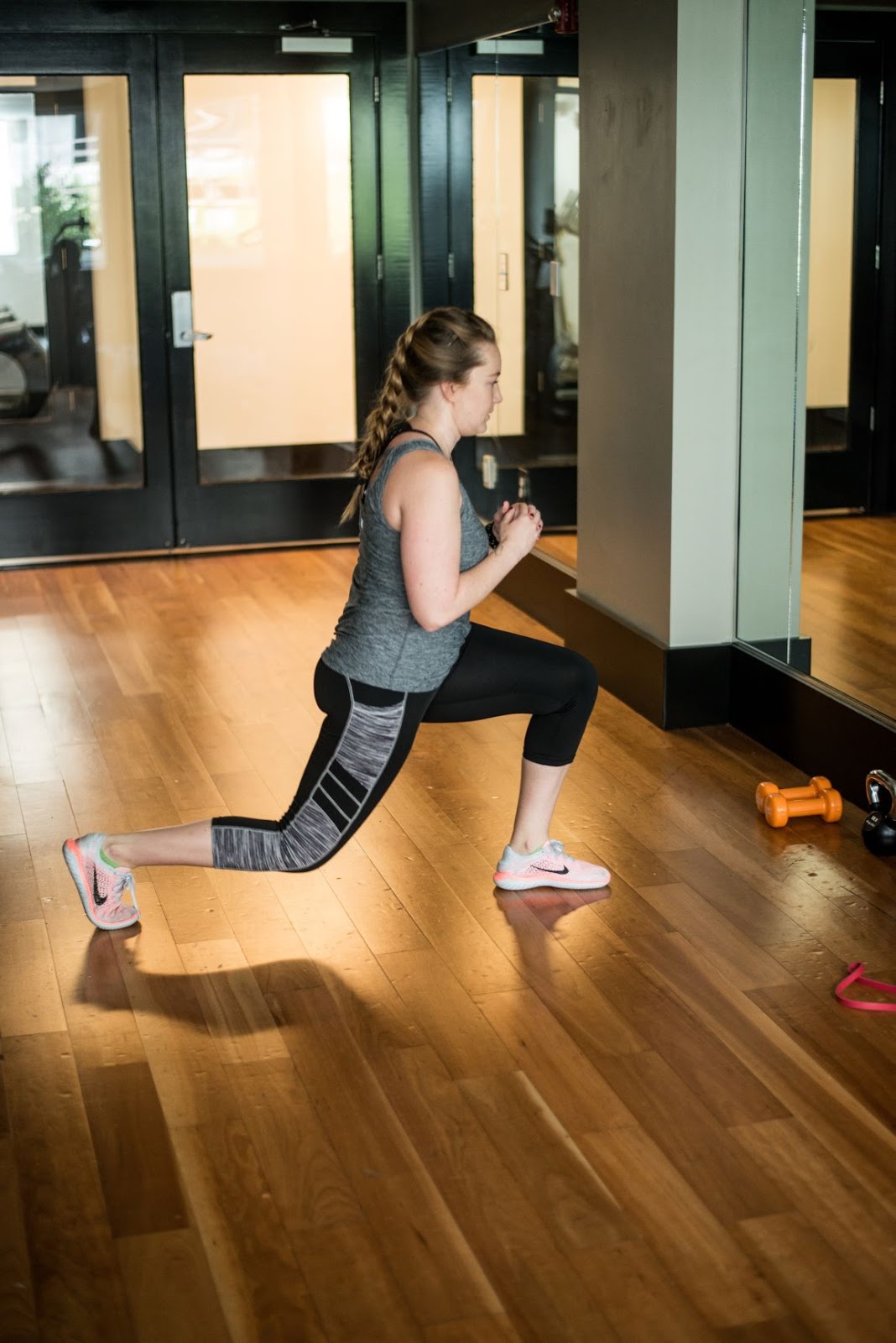
  1. Lunges 

2. Bulgarian Split Squat

3

3. Deadlifts 


4. Step ups (keep in mind, there are different variation of step ups)


5. Sled Push 


If anyone would like to add to this list, leave comments! There are plenty of other exercises that can be used as alternatives not mentioned, so explore your options, and may LEG DAY be with you! 

If you enjoyed this post and enjoy fitness/health — follow me on social media & this blog!

Instagram – Shay_FitnessWonderWoman

Facebook – ShayMFitnessWonderWoman

Personal Training Website – BeConfidentFit

Coming soon – podcast / E-book / More updates on the social media platforms 

Coconut Oil & Health

Good Oil? Healthy Oil?

For the everyday American, oils are usually used in most diets, recipes, and labelled on most food products we see on our shelves. However, the type of oils we include in our diets for a healthier lifestyle pend on what’s available, what we hear from social media/news sources/professionals, what’s financially feasible. and whether we like the taste or not. Unfortunately, when the world speaks of something “trendy” or “hip” we as humans want to take the world up on its offer and assume that if the majority of people are using it, then it has some truth to it – sadly this isn’t always true and in the long term of things, it doesn’t always hold weight to follow a pack (doing your own research does wonders- even in small doses). 

Coconut oil has been and is one of those oils that the world spoke very highly about in replacing the canola and vegetable oils because of it being a healthier alternative to the oils that we know don’t offer any nutritional value. All the while coconut oil does have its benefits, but it also holds risk — and much like anything else. should be used in moderation for good health practices. I for one, will admit that I bought and used coconut oil in the past for a long streak of time — it was something new to try and explore and I wanted to experiment with it & I didn’t at the time do the proper research to know that while it was a healthy alternative –there were things that I needed to know / to take into consideration before entertaining this new fad. Now that I am better educated and more versed on the positives and negatives of this particular oil, I want to share my research with others in order to help individuals make better choices and understand the benefits it has but also make them aware of the risk it might have on our bodies as well.

For starters, coconut oil is mostly made up of saturated fats (which we know of as the “bad” fat) – whereas unsaturated fats are the healthier form of fats found in fish, nuts, seeds, etc. The AHA – American Heart Association made a claim that Americans should consider replacing their saturated fats with more unsaturated fats. Also claiming that those who are at risk of heart disease / cardiovascular disease should consume 6% of saturated fats compared to not at risk individuals who should consume no more than 10% of saturated fats –Harvard Blog

Personally this makes sense to me, considering the fact that unsaturated fats help to reduce bad LDL cholesterol. 

Now the health claims that are made about coconut oil are true as far as benefits go to a certain extent, but the type of coconut oil sold on shelves is NOT the same formulated coconut oil that professionals speak on when stating these claims in ALL cases so we have to be aware that there are different forms of coconut oil in how it is made — making it harder for us consumers to understand what all we are getting when we buy it from our store shelves. Which brings me to my next point – the type of coconut oil sold on shelves usually has what is called “lauric acid” – which is said to have health benefits where it raises HDL cholesterol levels as well as the LDL. Harvard blog

Based on the information I have read from various studies, professional blogs, and articles – coconut oil is neither a superfood nor poison – which means we need to treat coconut oil with the same respect as we do with most of our food products: use it in moderation/sparingly, read the food label of the coconut oil you buy from our supermarkets (look up ingredients you don’t know), be curious and research the product, and try to follow healthy food guidelines when consuming this product. 

Body Composition – BIA

BIA Measurements (Bioelectrical Impedance Analysis)

So we are on our last body composition phase now and this time we have something a little more techy  compared to the last 3 body composition measurements. My gym had a handheld version of this technology but now we no longer use it, and use something a little more savvy called “Evolt” — which I will talk about in another post (because I have only used it once & it is a new form of technology for me) 

For those of you who are new to BIA, it measures body composition (typically body fat and body mass) using a weak electric current that flows through the body & the voltage is measured in order to calculate impedance/resistance of the body. The current is effected by the amount of water in the body (including blood, etc)

I personally found that I enjoyed using this method of measurement for my clients for a while because it was non invasive and gave them a sense of where their body fat lies compared to only managing weight — which as a personal trainer, I truly believe that body fat is much more important to look at than to look at only weight. 

However, there are pros and cons of using this mechanism that one should keep in mind when utilizing it. 

a

PROS:

  • Non invasive form of body composition
  • pending the type you buy, it can range in price from cheap to more expensive
  • handheld device available
  • clients are able to be fully clothed —  which for many people makes them happy
  • some gyms carry this device 
  • easy to use 
  • user friendly
  • more perspective about the body (body fat) not just weight
  • quick method
CONS:
  • Body geometry is different in an obese persons & that means water distribution could differ too 
  • It can under predict body fat or over predict 
  • some studies have shown that BIA has high amounts of errors 
  • It is recommended you use BIA over an extended about of time — so basically every 3-6 months instead of short term evaluations for better results. 

If all else fails, use multiple methods or have a professional in the field take your body composition with something more up to date and accurate – with science and technology constantly changing and developing; there are always better methods being invented.