Body Composition Measurements: Skinfolds

Skinfold measurements

It has been awhile since my last blogging post – sorry about the long pause, I was trying to get a new structure going for my clients at the gym / working on my own scheduling so I wouldn’t be driving back and forth so often/ and working on getting to know the new clients I have taken on, not to mention, my gym had a grand opening and I wanted to be present so I could sell myself to possible new members. With all this being said, I took a break from blogging & haven’t been as present on Instagram either BUT this will all change, I am going to start back at blogging and getting on instagram more often again so I can rebuild myself as a personal trainer and have recent post for my clients at the gym to read. On that note, I am going to continue where I left off talking about body composition measurements. 

Skinfolds, have any of you heard of this before? In college was my first time being introduced to it and learning how to properly measure someones body using calipers. Since then I haven’t used this method in a really long time, and my gym doesn’t use this method — we have something new called “evolt” (high tech machine) and seems like it will be the future for body composition measurements. Anyways, for those of you who don’t know what I mean when I say “skinfold measurements” — it is another way of saying pinching the skin using calipers & basically there are multiple ways of doing this:

1) The 7 site skinfold 

2) The 3 site skinfold 

Men and women have different areas of the body that needed measured during the skinfold measurement. If we are doing the 7 site skinfold — both men and women will need to use the calipers to measure: chest, abdomen, thigh, triceps, axilla, subscapula, suprailliac 

For women the 3 site skinfold sites: Triceps, thigh, suprailliam

For men the 3 site skinfold sites: Chest, thigh, abdomen

Steps to take proper skinfold measurements:

  1. Identify which part of the body you will be taking the measurement. Take ALL measurements on the RIGHT side of the body. 
  2. Grasp the skinfold firmly with the thumb and index finger of the left hand
  3. Hold the calipers perpendicular to the site, place the pads of the calipers approximately 1-4 inches from the thumb and forefinger
  4. Approximately after 1-2 seconds after the trigger has been released, read the dial to the nearest 0.5mm
  5. A minimum of two measurements should be taken at each site with at least 15 seconds between the measurements to allow the fat to return to its normal thickness.
  6. Continue to take measurements until two measurements vary by less than 1 mm
Once finished you will want to do the calculations for fat weight and lean weight. 
Pros/cons?
Of course there are some pros and cons using this method, but for the most part personal trainers learn this method early on because it can be a decently accurate method if done correctly and efficiently. 
I’d say the con that seems to bother people the most is the fact they have to show their body in the first place — especially if they feel self conscious about their physique and/or weight, Most clients will not be a fan of this if they are self conscious / low self esteem/ modest/ or don’t like the feeling of the calipers pinching their skin. While the positive I have seen is, the fact clients then know where the majority of their fat stores inside their body. 
I think the important thing to take away from using this instrument is taking your time and being as precise as possible and being empathetic towards clients whom may not feel comfortable having their fat seen or pinched. Otherwise, I would say it is a great tool due to it being relatively inexpensive, and small enough it can be taken anywhere. 
Leave me comments if you are someone who has used skinfold measurements for yourself or others? 

Measuring Body Composition – Circumference

Circumference Measurement 

Photo by Siora Photography on Unsplash

It has been a few days, but in the last post I discussed BMI — in today’s post we will go over another form of body composition measuring; called circumference. 

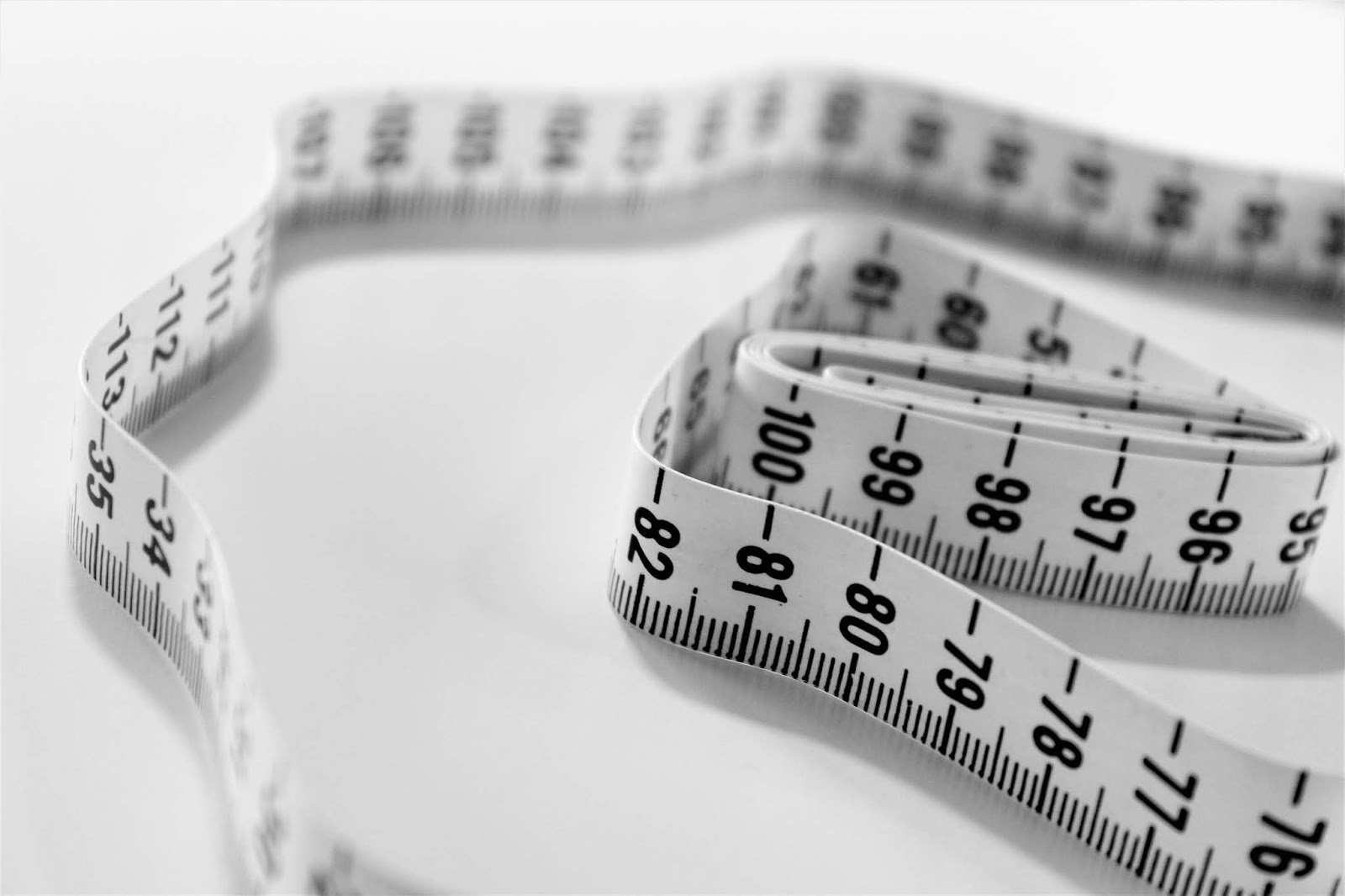
When using this term, it means to measure the body’s “girth” using a tape measure. There are many sites that can be measured on the body using a tape measure, but typically you will see the thighs, waist, arms, chest and possibly the hips as well. pending what is important to you at the time, you may decide to measure all of the above or one particular part of the body. 

Measuring girth / circumference can have its advantages and disadvantages; personally I find that it is easy to use and inexpensive and now a days, you can purchase measuring tape specifically for body fat measuring on Amazon, and they aren’t much more than the original. 

Some disadvantages you will run into with using a a tape measure is, pending the type of clothing you are wearing, what you have recently digested, how tightly you hold the tape around you, and the placement of the tape around the specific body part will determine how accurate your number will be & it is highly recommended you have someone else measure you to make sure you get the best results. Keep in mind that knowing your circumference doesn’t mean you will know your body fat % necessarily but it can tell you if you have gained or lost inches, or perhaps it can be used when wanting to fit into something specific — such as knee sleeves ( I would know because I need knee sleeves for a competition in powerlifting and all of the websites recommended I measure my thighs in order to have the best fit). 

Utilizing this type of body composition tool can be helpful for starters but eventually you will want something more accurate depending on how serious you want to be about reaching your goals and how serious you are about wanting to know where your body fat and weight is compared to where it was. Learn this type of body measuring to use as a reference in the future, but again don’t rely on it heavily because it definitely has its disadvantages. 

Glutamine Supplementation

Glutamine 

Photo by Amanda Jones on Unsplash

Glutamine comes in both powder and pill form. It is one of the most abundant amino acids in the body, and considered essential for intestinal function, immune response, and amino acid homeostatis during times of severe stress.

Main purpose: Serves as a building block for protein. 

Also considered as a “conditionally essential amino acid”; must be obtained from diet under certain conditions (injury or illness)

Keep an eye out for these foods (they have a good source of glutamine)

  • Eggs
  • beef
  • skim milk
  • tofu 
  • white rice
  • corn
(meat and other animal products are the simplest way to get high doses of it — virtually any food with protein will have some form of glutamine within it)
Fun fact: Studies have shown a real need for glutamine high diets, and foods after major injuries  — leading to shorter hospital stays after surgery & improved health
Intestinal health 
 
Glutamine is an important energy source for the intestines 
  • Serves as a barrier between the inside of your intestines and rest of your body — protecting against leaking gut 
Muscle gains & Exercise Performance
 
  • Decrease muscle soreness & improve recovery after intense exercise
  • no difference in strength & mass when taking glutamine supplements 
Overall, this is a supplement you may be getting the most from your foods, and it isn’t needed as an aid, but for those of us who don’t eat high protein diets or animal products, it may be wise to start taking this supplement or looking into it after surgery in order to help with recovery. 
Personally, I have taken glutamine supplementation — still do, daily and it has helped with recovery and then some in my opinion but doesn’t mean everyone will feel the same way. 


Susan G Komen Breast Cancer 5k

Saturday I partook in my first 5k run — and I did it to raise money for breast cancer. I met some new people and took some selfies with my team afterwards. If you want to check out more photos from the race, follow my Instagram page — ShayFitnessWonderWoman

It was a wonderful time and I was happy I could partake in an event with a great community & to have had a team with my gym I work at. I definitely found the run a challenge considering I am not a long distance runner by any means, but I finished and that is truly awesome in my book! The last picture is of a gentlemen who stopped me after the race to applaud me and made mention of how he runs for a living; he was from out of town and we both shared stories of having members of our family either battle or die from cancer. I found out later he won 3rd place in his age group and funny story, because I ended up keeping up with him the whole time and I feel honored to have done so, because he did amazing!

If you haven’t had a chance to do a 5k , please give it a go, just for the experience. I think it feels good when you finish a race — especially when you have no plans on winning or beating a certain time, you just do it for the community involvement and the cause and for the pure enjoyment of knowing you did something new and worthwhile for yourself.

If you are a 5k runner or have done one in the past, share your experiences in the comment section, get more people running and staying active 😀

BCAAs — Supplements

Take What You Need

“Branch-Chained Amino Acids”

Never taken BCAAs during.before or after your workout? You probably aren’t missing out on anything if you eat a variety of foods & keep your health maintained with ample water intake, but even with a perfect nutritional base — some people still decide to take BCAAs, and you probably want to know why. 

For starters, you probably didn’t realize what these BCAAs are: they are your “essential amino acids consisting of leucine, isoleucine, and valine — basically to sum it up these 3 words comprise close to 35% of your body’s muscle protein. I’ll assume you understand protein & muscle — if not, I’ll explain in a future post. Why are these essential? because your body doesn’t make them on its own! YOU GUESSED IT: if we have to get these from food or supplement sources — easy enough? 

This post is for informational purposes only, so opinions are welcome. but I am not here to lecture you in either direction — I have always been an advocate of getting the most from your food groups then if that becomes an issue, to extend your horizons and choose healthy alternatives –– so if you take them, GREAT! if you don’t, GREAT! 

The purpose of BCAAs?

  • help with enhancing muscle recovery after your workout
  • GNC referenced “leucine is the star player in higher quality BCAAs”  more of it and less of the other two make it worth your dollar. 
  • Helps to limit fatigue
  • Can benefit those during their weightloss journey when paired with good nutrition, good workout regimen, and when paired with glutamine (i’ll go over this supplement in a future post) which will help normalize visceral fat
  • BCAAs can reduce your D.O.M.S – delayed onset muscle soreness 
The best BCAA supplements are up in the air, but when it comes to food try eating more chicken, eggs, tuna, salmon, cottage cheese, etc (aka do your research)  & the fun fact: BCAAs can be taken during, before and after your workout– no harm done!